How Gaming Has Evolved Zeromagtech
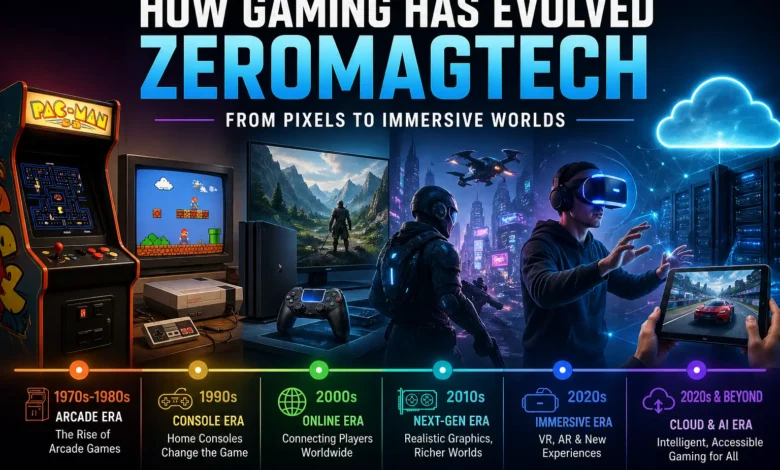
Gaming has never stood still. It has always been a space where technology and imagination meet, constantly pushing each other forward. What began as a simple form of digital entertainment has grown into a global phenomenon that influences culture, communication, and even careers. When we explore how gaming has evolved zeromagtech, we are not just looking at better graphics or faster devices. We are witnessing a complete transformation in how games are created, experienced, and shared.
The evolution of gaming reflects the pace of technological progress itself. Every decade has introduced something new, something that changes how players interact with virtual worlds. From the early days of arcade machines to today’s intelligent and connected systems, gaming has become more than just play—it has become an experience.
The Foundation: Early Gaming and Its Simplicity
The roots of gaming lie in simplicity. Early video games were built with limited technology, meaning developers had to focus on core gameplay rather than visuals. Games were straightforward, often centered around achieving high scores or completing repetitive challenges. Despite these limitations, they captured attention in a powerful way.
Players gathered around arcade machines, competing for the top score and sharing a sense of excitement. These early systems introduced the basic structure of gaming—interaction, reward, and challenge. While they may seem primitive now, they were essential in shaping the direction of the industry.
Understanding how gaming has evolved zeromagtech begins here, with these foundational experiences that proved games could engage people deeply even without advanced technology.
The Shift to Home Consoles
As technology improved, gaming moved from arcades into homes. Consoles allowed players to enjoy games in their own space, making gaming more accessible and personal. This shift also encouraged longer gameplay sessions and deeper storytelling.
Developers began experimenting with new ideas. Games were no longer limited to short bursts of play—they became journeys. Characters developed personalities, stories gained depth, and players became more emotionally connected to what they were playing.
This stage played a key role in how gaming has evolved zeromagtech, as it introduced the idea that games could be more than entertainment—they could be immersive narratives.
The Internet Revolution and Multiplayer Experiences
The introduction of the internet changed gaming forever. Suddenly, players were no longer alone. They could connect with others across the world, creating shared experiences that extended beyond the screen.
Multiplayer games became incredibly popular, offering both competition and cooperation. Players formed teams, built communities, and even developed friendships through gaming. It was no longer just about playing a game—it was about being part of something larger.
This transformation is central to how gaming has evolved zeromagtech, as connectivity became a defining feature of modern gaming. Games turned into social platforms where interaction mattered just as much as gameplay.
The Rise of Realism and Detailed Worlds
As hardware capabilities increased, so did the quality of game design. Graphics improved dramatically, allowing developers to create detailed environments and lifelike characters. Worlds became larger, more interactive, and more believable.
Players could explore open environments, make choices that affected outcomes, and experience stories that felt personal. Sound design, lighting, and animation all contributed to a sense of realism that drew players deeper into the experience.
This level of immersion highlights how gaming has evolved zeromagtech, as technology continues to enhance the emotional and visual impact of games.
Artificial Intelligence and Smarter Gameplay
Artificial intelligence has become a defining element in modern gaming. It allows games to respond to players in ways that feel natural and dynamic. Instead of following fixed patterns, characters can adapt, learn, and react in real time.
This creates a more engaging experience. Players feel challenged in new ways, as the game adjusts to their actions and decisions. AI also supports more complex storytelling, where outcomes can change based on how the player interacts with the world.
When examining how gaming has evolved zeromagtech, AI stands out as one of the most important advancements. It transforms games into living systems rather than static experiences.
Cloud Gaming and Breaking Barriers
One of the most significant developments in recent years is cloud gaming. Traditionally, playing high-quality games required expensive hardware. Now, games can be streamed directly from powerful servers, making them accessible on a wide range of devices.
This shift removes many of the barriers that once limited who could participate in gaming. Players no longer need the latest console or a high-end computer. All they need is a stable internet connection.
Accessibility plays a major role in how gaming has evolved zeromagtech. It reflects a move toward inclusivity, where more people can enjoy gaming regardless of their resources.
Cross-Platform Integration
Modern gaming is no longer tied to a single device. Players can move between platforms seamlessly, continuing their progress wherever they go. This flexibility fits naturally into today’s lifestyle, where people use multiple devices throughout the day.
Cross-platform functionality also brings players together. Friends can play the same game even if they are using different systems, removing the limitations that once divided gaming communities.
This development further demonstrates how gaming has evolved zeromagtech, as it prioritizes convenience and connection.
Virtual Reality and New Dimensions of Play
Virtual reality has introduced a completely new way to experience games. Instead of controlling a character on a screen, players can step inside the game world itself. Movement, interaction, and perspective all change, creating a more immersive experience.
Augmented reality adds another layer by blending digital elements with the real world. These technologies are still developing, but they offer exciting possibilities for the future of gaming.
This innovation shows how gaming has evolved zeromagtech by expanding the boundaries of what gaming can be. It is no longer limited to screens—it can become a fully interactive environment.
Live Services and Continuous Evolution
Modern games are not static. They continue to evolve long after their release. Developers regularly add new content, fix issues, and respond to player feedback. This creates a sense of ongoing development, where games grow over time.
Players remain engaged because there is always something new to explore. Events, updates, and expansions keep the experience fresh and dynamic.
This approach is another example of how gaming has evolved zeromagtech, as it shifts from one-time products to continuous experiences.
The Human Element in Gaming
Despite all the technological advancements, the heart of gaming remains human. It is about connection, creativity, and emotion. Players invest time, energy, and passion into the games they play.
Developers also bring their own creativity into the process, crafting worlds and stories that resonate with audiences. Technology may drive progress, but it is human imagination that gives gaming its meaning.
This balance between technology and creativity is essential to understanding how gaming has evolved zeromagtech.
The Future Ahead
The future of gaming holds endless possibilities. Technology will continue to advance, introducing new ways to play and interact. AI may become even more sophisticated, creating personalized experiences tailored to each player.
Cloud gaming will likely expand, making high-quality games available to even more people. Virtual and augmented reality may become more common, offering deeper immersion and interaction.
The journey of how gaming has evolved zeromagtech is ongoing. Each innovation builds on the last, shaping a future that is both exciting and unpredictable.
Conclusion
Gaming has transformed from simple beginnings into a complex and dynamic industry that touches millions of lives. It has grown alongside technology, adapting to new possibilities and redefining what entertainment can be.
When we look at how gaming has evolved zeromagtech, we see a story of constant progress. From early arcade games to intelligent, connected systems, every stage has contributed to what gaming is today.
The evolution is far from complete. As technology continues to advance, gaming will keep changing, offering new experiences that challenge expectations and inspire imagination.
FAQs
What is meant by how gaming has evolved zeromagtech?
It refers to the transformation of gaming through modern technologies like AI, cloud systems, and advanced connectivity.
Why has gaming changed so much over time?
Advancements in technology and player expectations have driven continuous improvements in gameplay and design.
How does AI impact modern gaming?
AI creates smarter gameplay by allowing characters and environments to adapt to player actions.
What is the benefit of cloud gaming?
It allows players to access high-quality games without needing expensive hardware.
What can we expect from the future of gaming?
More immersive experiences, better personalization, and wider accessibility for players worldwide.